THE MINI-MACHINE VERDICT: If you’re drying a genuinely tiny enclosed space with a small moisture load, a passive absorber or small powered collector may be enough. If you’re fighting a wet bedroom, bathroom or basement, buy a real room-capacity dehumidifier—or fix the moisture source.
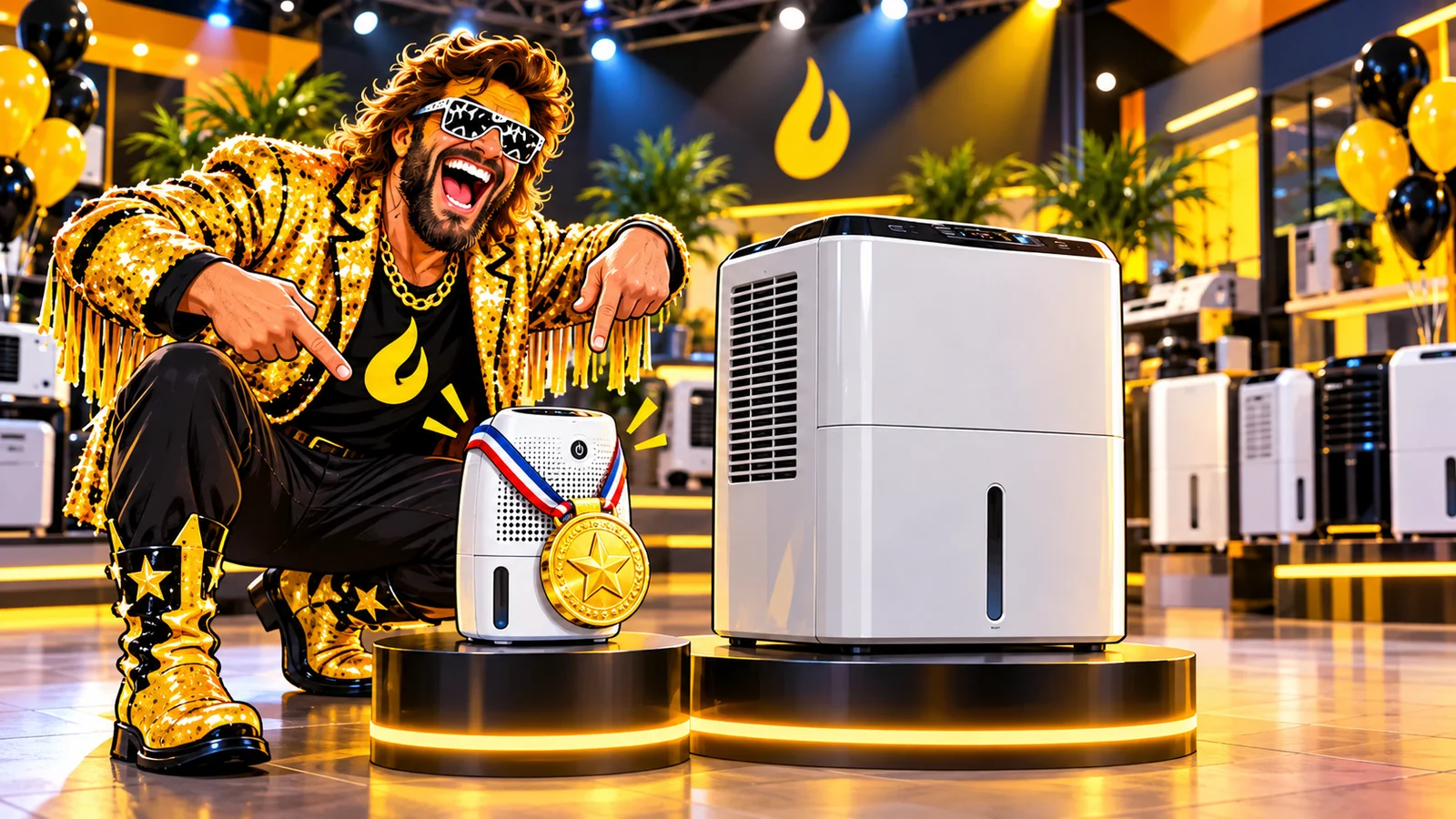
Look at that miniature appliance! Small lights! Cute tank! It could win a stuffed animal at Bruce’s carnival. But if you’re asking it to drain a swamp, that little champion has entered the wrong weight class.
What’s actually inside the little box?
Many small electric dehumidifiers use thermoelectric cooling rather than a full compressor/refrigeration system. They can be physically compact, but their water-removal rates under favorable test conditions are typically far below those of mainstream room-scale compressor units. The relevant comparison is water removed per unit of time in comparable conditions, not whether both products contain a water tank.

Match the job to the technology
| Problem | Buyer’s decision |
|---|---|
| Slight dampness in a storage niche or small enclosed space | Try a passive absorber if the setting suits one. |
| A very small controlled space needing modest electric removal | A light-duty small-space device may fit, after checking actual published collection rate. |
| Whole bedroom, recurring bathroom humidity or basement mustiness | Consider an appropriate compressor portable and correct sources/ventilation first. |
| Visible water infiltration or soaking materials | Stop appliance shopping and fix the source. |
The units trap
Product marketing sometimes mixes ounces per day, milliliters per day, liters per day and pints per day. Confirm whether the claim is a removal rate, a collection-tank size or an enclosure-area suggestion. A tank that holds plenty of water might still take a long time to fill because the device removes very little. If a unit advertises extraction only at very warm, very humid test conditions, don’t assume the same performance in a cooler, moderately humid home.
Do the recurring-cost arithmetic
Absorbent crystals or hanging moisture bags are inexpensive at entry but require replacement or disposal. Powered collectors use electricity and may need frequent tank emptying. A modest job can justify a simple consumable; a large constant moisture load can make either approach financially silly compared with one capable, appropriately installed machine.
What the little guys aren’t
They are not a replacement for exhaust ventilation, foundation repair or a properly sized room-capacity unit. They’re not necessarily silent, maintenance-free, or safe for every bathroom or electrical environment merely because they’re small. Respect manufacturer location instructions.
Bruce’s tiny-deal verdict
Use small technology for small jobs. For a room-scale humidity load, skip the novelty act and buy a competent compressor class. Check the sizing guide before the checkout button seduces you with miniature perfection.