THE HEAVY-HITTER VERDICT: If the area is genuinely humid, well connected, within the model’s operating range and still suitable for a portable machine, step up to an appropriately higher-removal portable. Don’t buy extra capacity to compensate for a wall, an active leak or an impossible drain.
Bruce called in the reinforcements. They’re useful when the moisture load demands it. Otherwise you’re parking a bigger noisy box beside a problem you still haven’t fixed.
When the higher-moisture class makes sense
Consider it when measured humidity remains persistently above target despite appropriate operation, the ongoing moisture source is understood or controlled, and the room is sufficiently connected for the unit to process air. A larger connected basement or open main-floor zone can be a legitimate application. Actual humidity conditions, extraction rate and run-time constraints matter more than the carton area claim.
Three questions before you trade up
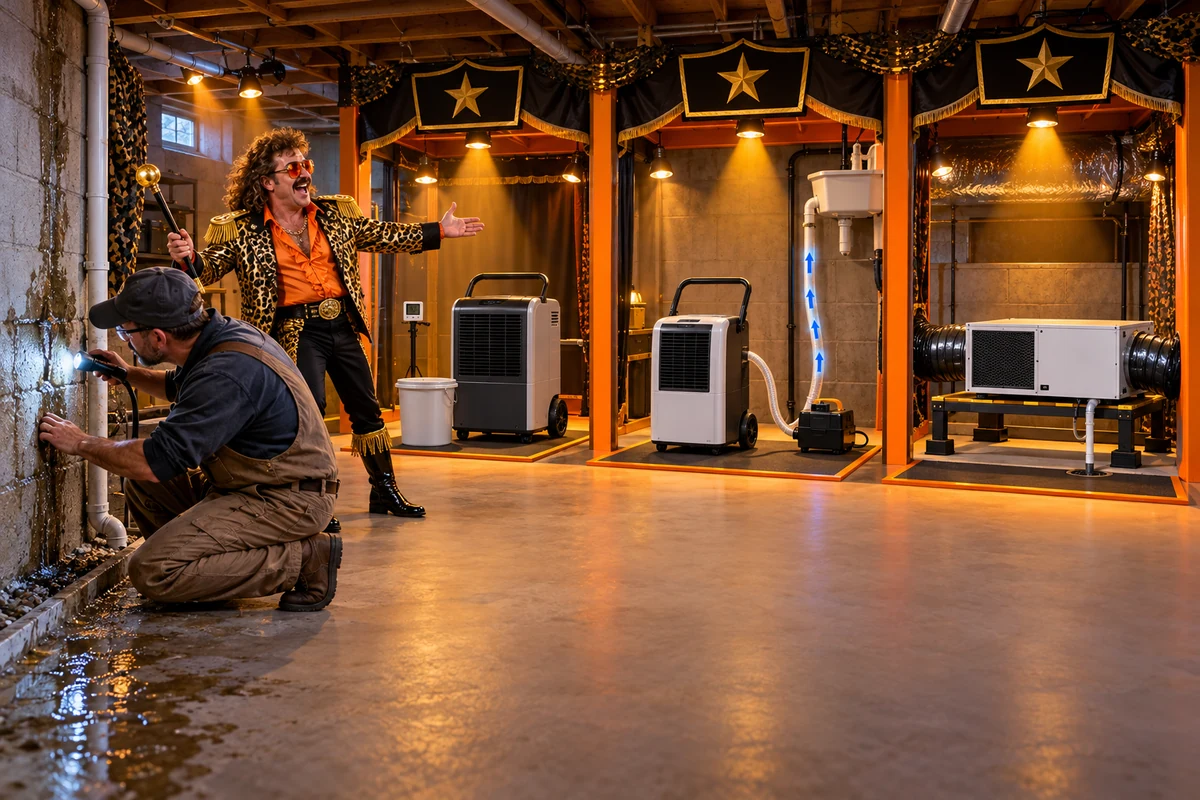
- Is the incoming moisture load real? Confirm with a separate hygrometer. An appliance on continuous mode might simply be doing what you told it to do.
- Is air getting to the unit? An oversized portable in one room may leave a closed adjacent room untouched. Read air-zone guidance.
- Can the water leave? A full bucket ends unattended operation regardless of the published extraction figure. Choose drainage using actual drain geometry.
High capacity isn’t a free lunch
Larger portables can add physical bulk, compressor/fan noise, heat and operating expense. They still require placement clearances and service access and may be poorly suited for cold or inaccessible sites. If a dedicated basement/crawl-space environment drives the decision, evaluate dedicated equipment instead of buying the largest portable on the shelf.
A conditional 50-pint pick: do you also need the pump?
A conditional 50-pint portable option: TCL H50D46W, 50-pint class. Consider this exact model when measured moisture load calls for a 50-pint portable and its built-in pump also solves your drainage route. For gravity-drain buyers, compare appropriately sized non-pump equipment before paying for pump hardware. TCL documents 50-pint daily removal, onboard humidity controls and a built-in pump.
But the pump is not the reason to buy for moisture load. Its 50-pint rating is the relevant capacity distinction here. If the moisture load is smaller or a gravity-drain model fits, avoid unnecessary capacity or pump premiums. Check the actual listing price against smaller standard-portable equipment.
Important limitations: long-term reliability confidence for this exact listing is limited; fan sound, tank handling and heat may be noticeable. TCL describes frost-protection operation down to 41°F, which is not a claim that rated extraction continues in cold spaces. Follow the actual current model manual and consider dedicated equipment for demanding installations.
Affiliate disclosure: As an Amazon Associate I earn from qualifying purchases. DehumidifierPros may receive a commission from qualifying purchases through links on this page, at no extra cost to you. These are researched recommendations, not claims of firsthand DHP testing.
Exact model: TCL H50D46W. Check TCL H50D46W 50-pint on Amazon.
Prices, availability, sellers and product variants can change. Confirm the exact model and included features before ordering.
Manufacturer specs: TCL H50D46W official description. If pump lift is the primary reason you’re shopping, use the pump-specific decision page instead.
The no-upsell rule
If a standard portable already controls your humidity and meets the duty cycle comfortably, stay there. Extra capacity that does no useful work is just extra expense. If water is actively entering the foundation, repair first.
Bruce’s heavy-hitter conclusion: Buy extra moisture removal for a verified extra moisture load. A bigger logo, longer square-foot claim or scarier-looking damp patch is not a diagnostic measurement.