THE CRAWL-SPACE VERDICT: Correct standing water, exposed-ground moisture and air-entry problems first. For a crawl space that needs active long-term moisture control, evaluate dedicated crawl-space equipment with documented temperature suitability and continuous drainage—not a random portable dangling from a marketplace listing.
Bruce isn’t crawling under your house in a leopard-print jacket to empty a bucket every Tuesday. Neither should you. This job calls for a system, not a prank-sized appliance with a heroic coverage claim.
Start with the enclosure and water sources
Check for liquid water intrusion, failed drainage, plumbing leakage, missing or damaged ground vapor barriers, and uncontrolled humid outdoor-air entry. A dehumidifier cannot compensate indefinitely for water coming in at the source. The best purchase might be drainage correction, a proper ground barrier, or qualified encapsulation work before any machine is ordered.
What a Dehumidifier Won’t Fix is the mandatory first stop when active intrusion is present.
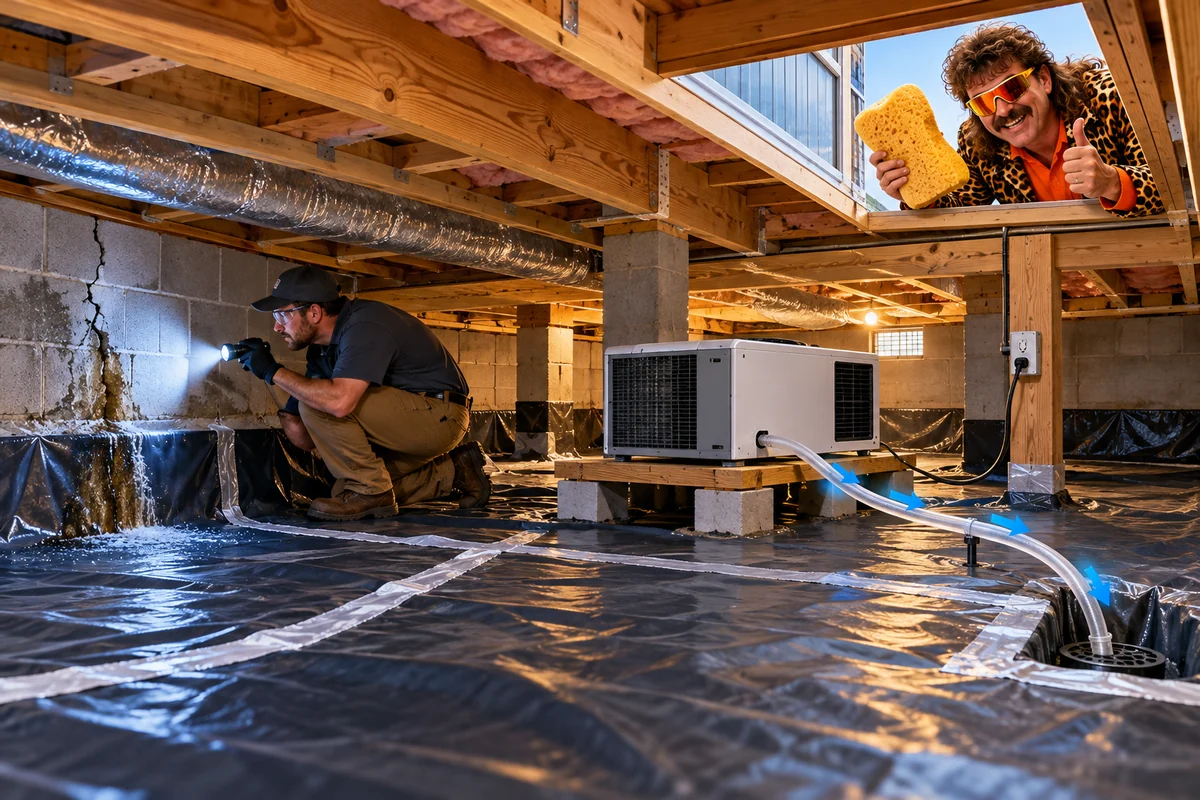
What makes this installation different
| Constraint | Required decision |
|---|---|
| Cold operating conditions | Check the exact model’s documented operating range, defrost behavior and rated performance in relevant conditions. |
| Limited access | Choose a serviceable installation with filter, controls and maintenance access—not a bucket-only unit that requires regular crawling. |
| Persistent moisture load | Use a purpose-suitable dedicated residential class when justified. |
| Drain availability | Plan an approved continuous condensate route, with lift/overflow protection where necessary. |
| Ventilation or pressure conflicts | Evaluate as part of the building strategy; don’t install conflicting equipment by guesswork. |
Why the cheap portable is usually the wrong shortcut
A conventional upright portable can be suitable for some accessible, conditioned basements. A restricted crawl space adds enclosure, service, temperature and drainage issues that the ordinary portable may not address. Do not assume the label’s claimed floor-area coverage validates crawl-space use. Do not infer that an ordinary pump-equipped portable is automatically a dedicated machine.
Where the money should go
If the moisture entry and enclosure problems are solved and active drying is still needed, the equipment budget should emphasize verified suitability, durable drainage, accessible filtration, appropriate controls, electrical compliance and workable service arrangements. A dedicated unit can be worth more than a portable when the installation actually demands those attributes; otherwise it is expensive theater.
The dedicated-unit recommendation now names Santa Fe Compact70 model 4044110 with manufacturer operating limits and a researched merchant path. Confirm the actual installation, drain arrangement and current stock; a named product cannot rescue a bad crawl-space enclosure.
Bruce’s underground rule
Fix water. Fix the enclosure. Then buy a purpose-suitable residential machine only if moisture monitoring supports it. See dedicated crawl-space recommendations for the equipment-class decision. A full bucket where nobody can reach it is not a moisture-control plan.