THE BATHROOM VERDICT: Before buying a dehumidifier, make the exhaust fan do its job. If humidity remains a real problem after appropriate ventilation and moisture-source fixes, a suitable portable may help—but do not put a regular portable into a splash zone.

Your bathroom might look like Bruce opened a steam-powered disco. That doesn’t mean the answer is a roaring appliance squeezed between the toilet and a dripping shower curtain.
Fix the wet-air exit first
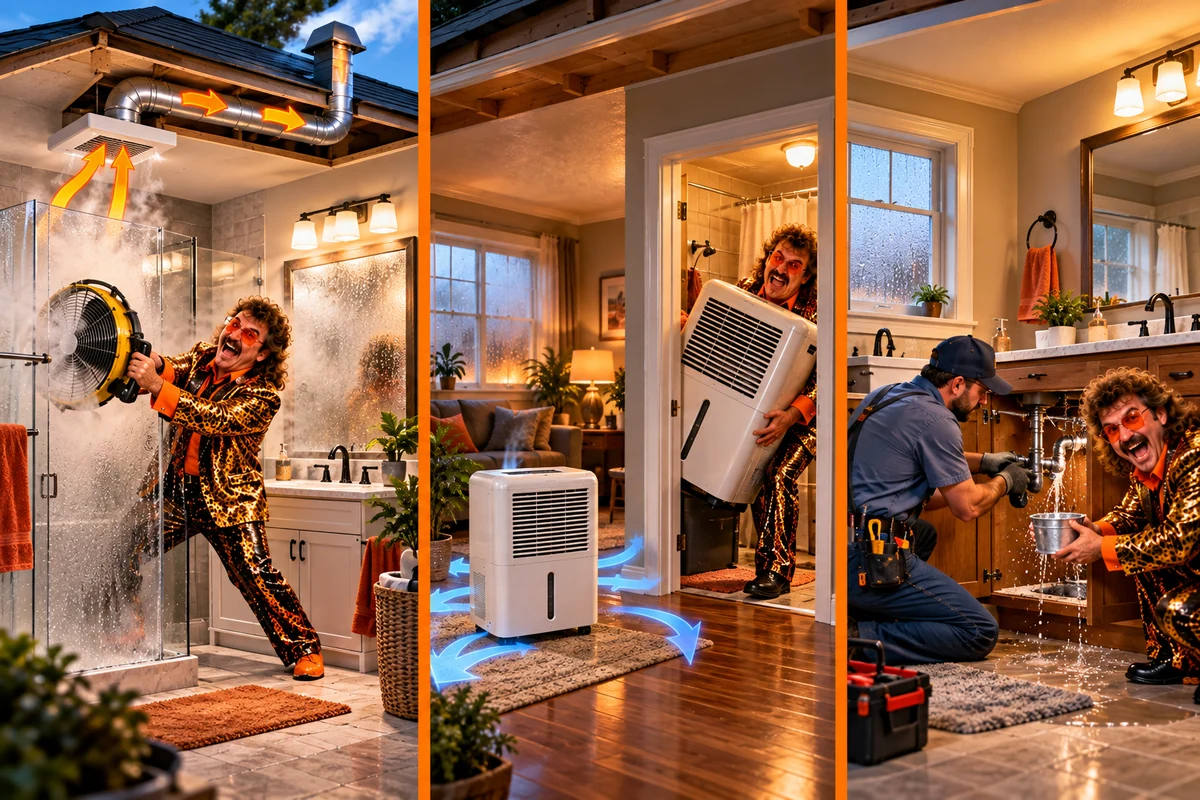
A bathroom routinely creates short, intense humidity spikes during bathing. The first remedy is working exhaust ventilation that discharges outdoors, adequate run time and correction of plumbing leaks or chronic water retention. An ineffective fan, blocked duct or fan exhausting into an attic is not a problem a countertop gadget should be asked to hide.
If paint peels, water collects in walls or flooring, or there is a plumbing problem, start with source correction. A dehumidifier cannot undo building damage or make a defective exhaust system acceptable.
When buying a machine actually makes sense
| Situation | Buyer’s decision |
|---|---|
| Steam clears with effective fan operation and surfaces dry normally | Buy nothing. Use and maintain ventilation. |
| Moisture stays high after ventilation and leaks are addressed, with safe placement outside wet zones | Assess a suitable compressor portable for the residual moisture load. |
| Tiny enclosed cabinet or storage niche, only very light localized dampness | Consider a passive absorber where appropriate; it won’t dry an occupied shower room. |
| Active plumbing leak, water behind tile or damaged subfloor | Stop appliance shopping; investigate and repair the source. |
Don’t treat a bathroom like an empty basement
Placement restrictions matter. Keep corded appliances away from sinks, tubs and shower splash areas and follow the product’s bathroom, electrical and clearance restrictions; a model may not be suitable for the room at all. Do not improvise extension cords, tuck the machine behind a wet towel or block airflow to make it fit a tiny floor plan.
Noise and heat matter too. Compressor units produce airflow and some heat and can be awkward in a confined room. If the only safe placement is outside the bathroom, assess whether the air can actually exchange through the doorway; a closed door may defeat the plan.
The mini-machine trap
A small thermoelectric collector can look adorable next to a hand-soap dispenser. Its comparatively low water-removal capacity makes it a poor answer for frequent shower loads. See Tiny Dehumidifiers: Cute, Quiet, Mostly Useless before buying by countertop footprint.
How much unit do you need?
Check persistent room humidity, available safe space and the surrounding room layout. Do not choose a nominal 35-pint machine just because one appears in a shopping search: that class can be overkill for a little bathroom, yet insufficient for a bigger uncorrected building problem. Our capacity guide gives you the practical sizing variables.
Bruce’s final bathroom sale
Working fan? No lingering dampness? Your best dehumidifier is the one you don’t buy. Persistent excess humidity despite correct ventilation? Choose a safe, suitable powered class, not a fake miracle mini. Ventilation first. Wallet second.