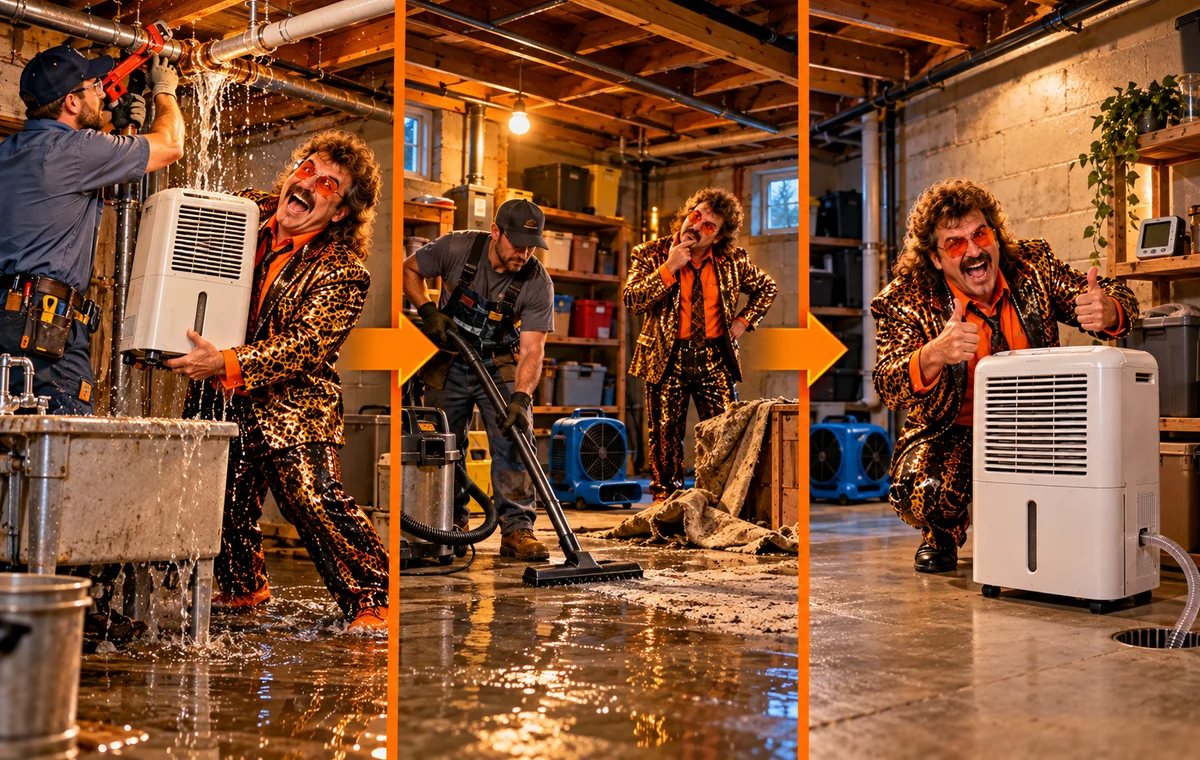
THE VERDICT: If water is entering your house, fix the water source first. A dehumidifier removes moisture from the air. It does not repair a pipe, seal a foundation, stop a roof leak, or turn a flooded basement into dry real estate. Bruce can shout at that machine until the neighbors call the cops. The wall will still leak.

When buying a dehumidifier is the wrong first move
Put the credit card away when you see any of these conditions:
- Active plumbing leak: a dripping supply pipe, leaking appliance connection, or overflowing fixture needs a repair and, when necessary, the water supply shut off.
- Bulk water or flooding: standing water, wet electrical equipment, or recurring water accumulation requires appropriate water removal, safety assessment, and source correction. A consumer dehumidifier is not a flood pump.
- Rainwater entering a basement: investigate gutters, grading, exterior drainage, foundation defects, or other entry paths rather than buying a larger appliance to fight an ongoing supply of water.
- Persistent wet building materials: wet drywall, insulation, subflooring, or framing can require direct drying, removal, or professional evaluation. Lowering room humidity alone does not prove concealed assemblies are dry.
- Shower moisture with poor ventilation: run and repair an adequately vented bathroom exhaust system. A portable appliance is not a substitute for exhausting shower steam outdoors.
What the machine actually does
A dehumidifier draws humid air through its system, condenses or otherwise captures some of that moisture, and returns drier air to the space. That can make a real difference after the water source is corrected, provided the equipment suits the space and operating conditions. It cannot block new water from getting in.
That distinction determines whether you should spend money on a dehumidifier at all. If room humidity remains excessive after the source is under control, a correctly selected unit may be part of the solution. If water keeps entering, the machine is fighting a losing battle.
What to do instead, in order
- Stop the source when safe. Shut off leaking water supplies where practical. For stormwater or structural leakage, identify the entry route and arrange the appropriate repair.
- Respect electrical and contamination risks. Do not walk into floodwater where electricity may be present. Floodwater, sewage, or large-scale damage calls for appropriate safety precautions and potentially professional remediation.
- Remove bulk water and assess materials. Extract or remove standing water safely. Inspect wet materials, cavities, and insulation rather than judging the job by a dry-looking floor alone.
- Verify the humidity problem that remains. Measure indoor relative humidity with a suitable hygrometer over time. Check for continued condensation, damp surfaces, or returning odors.
- Then choose equipment. Match a dehumidifier to the actual moisture load, connected air volume, temperature, and usable drainage path. Don’t buy on square footage alone.
When a dehumidifier is finally the right purchase
After an active source has been fixed and any necessary water extraction or material drying has been addressed, a dehumidifier is reasonable when the air still stays uncomfortably damp or measurable humidity remains too high for the conditions. A basement may need an ordinary portable, a pump-assisted portable, or dedicated equipment. Those are different buying decisions, not prizes for spending the most.
If the room has a practical lower drain, a gravity-drain capable machine may be enough. If the discharge has to travel upward, investigate a rated pump. If the space is cold, poorly connected, or inaccessible, equipment design and placement matter more than an impressive box label.
The no-nonsense decision
Water coming in right now? Fix the source. No bulk water, but consistently damp air? Start with the real sizing decision, then check bucket, gravity hose, or pump drainage. For a basement with an actual buying need, use our basement recommendation route.
Bottom line: Repair the leak. Dry what got wet. Then buy the machine that fits the remaining air-moisture job. Bruce’s magic moisture box is not a licensed plumber, and it never will be.