ONE OR TWO? Start with one correctly selected machine for one connected air zone. Add another only when measured humidity and genuinely separate spaces justify it. No product has yet negotiated a closed bedroom door.
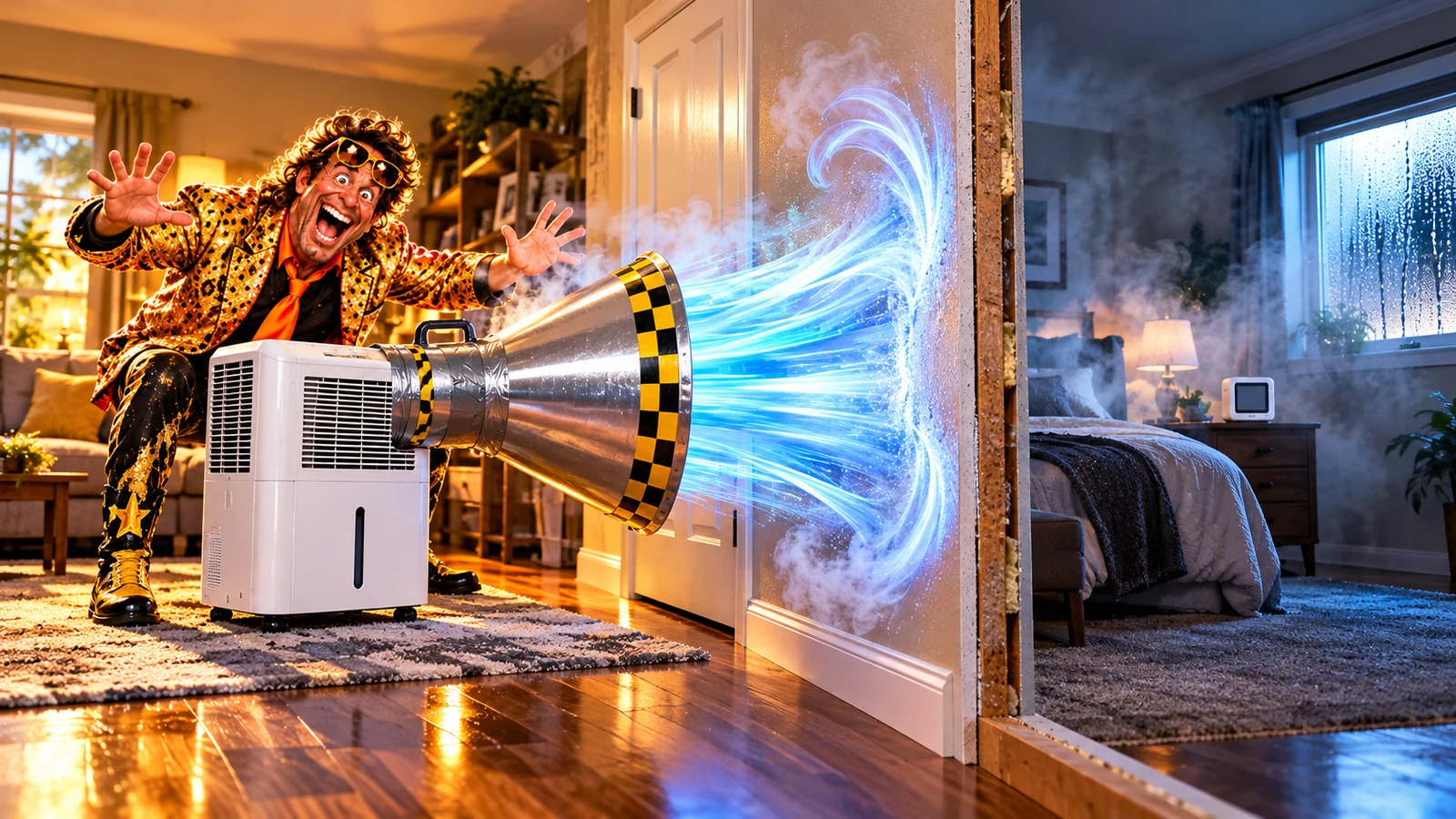
Bruce says the 4,500-square-foot box means your entire address gets dry. The kitchen says maybe. The shut guest-room door says absolutely not.
Air zones beat advertised floor area
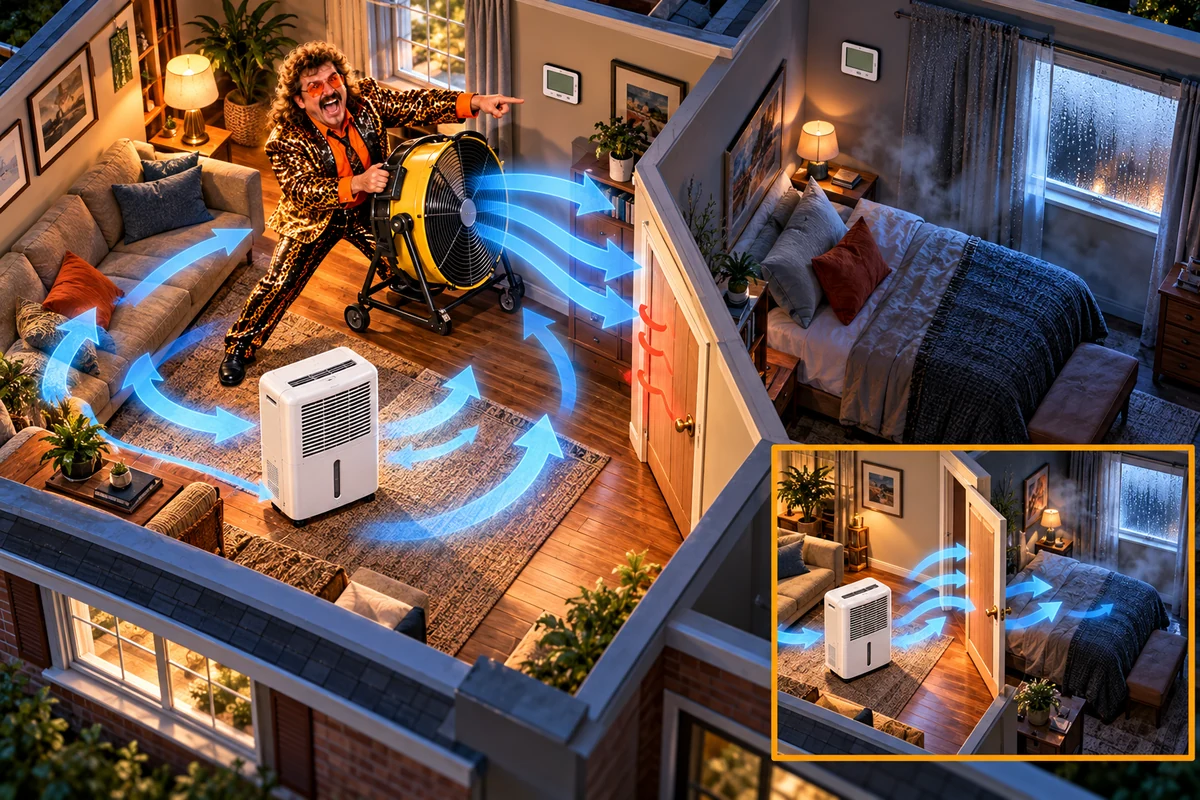
Air has to circulate through a dehumidifier for moisture to be removed. A large open living/dining area can exchange air around one machine. An isolated bedroom, upstairs office and closed laundry room may be effectively separate zones. One correctly sized appliance may leave the distant zone untouched despite a manufacturer’s generous floor-coverage figure.
A useful two-zone test
- Measure relative humidity in each representative space with a separate meter, at comparable times and away from the outlet of the appliance.
- Record which doors are normally closed, where return airflow is possible, and whether fans or central HVAC exchange air between spaces.
- Look for separate moisture sources such as a leaking pipe, damp foundation wall, poor bathroom exhaust or a persistently wet laundry area.
- Operate one suitable machine in the connected zone as directed, then compare the trend in humidity at the other location rather than assuming success.
- If a separate zone remains significantly humid after source corrections and ordinary airflow fixes, evaluate whether a second unit or a different distribution strategy is appropriate.
What to buy under each scenario
| Actual layout | Recommended decision |
|---|---|
| Open floor, modest to ordinary load | One standard portable can be a starting point. |
| Open zone, heavy persistent load | Check a higher-moisture portable before automatically buying two smaller units. |
| Two independently damp rooms separated in normal use | Separate portable locations may be justified; compare the noise, drain access and upkeep of each. |
| Whole-home distribution problem, duct integration warranted | Consider specialist residential equipment with proper design, not a random fan-and-duct improvisation. |
Why two machines are not always twice as smart
Two machines add noise, power draw, maintenance and condensate management. If one of the zones was humid only because of an uncorrected leak, you’ll buy twice the headache without solving the problem. And two buckets that nobody empties are still two machines that stop collecting.
Bruce’s wall-proof conclusion
One connected zone: try one good machine. Two isolated humid zones: possibly two. Active water problem: repair first. Count independent moisture jobs, not marketing square feet. See main-floor recommendations for the layout version of this decision.