WELCOME TO THE EQUIPMENT SHOWROOM. WE DON’T START WITH THE BOX. WE START WITH YOUR PROBLEM. A regular damp room, a cold crawl space and a closet with a musty jacket do not need the same machinery. The correct recommendation is the cheapest competent option that fits the whole job.

Before we sell you anything: do you have incoming water?
Standing water, a pipe leak, active seepage, rain intrusion or soaked building materials require source correction. An appliance can help manage residual humidity but isn’t the main repair. If the problem is simply how water exits an otherwise suitable appliance, start with drainage and accessories rather than buying unnecessary extraction capacity.
Find the class that belongs on your job
| Your moisture job | What to buy or do | What not to buy |
|---|---|---|
| Small enclosed, mild localized moisture | Passive absorber / desiccant | Oversized powered unit |
| Limited, very small-space moisture removal where passive isn’t a fit | Light-duty small-space option, within verified limits | Mini unit masquerading as a basement dryer |
| Ordinary damp living space / connected room | Standard compressor portable | Claimed square footage as the only sizing rule |
| Heavy recurring load in a portable-suitable zone | Higher-moisture portable | Underpowered novelty unit |
| Portable suitable, but condensate must rise or travel to a non-gravity drain | Pump-equipped portable | Gravity hose expected to run uphill |
| Permanent basement/crawl-space duty with installation constraints | Dedicated residential dehumidifier | Ordinary portable without temperature/service validation |
| Whole-house or engineered air distribution requirement | Specialist high-capacity / ductable equipment | Improvised ductwork around a random portable |
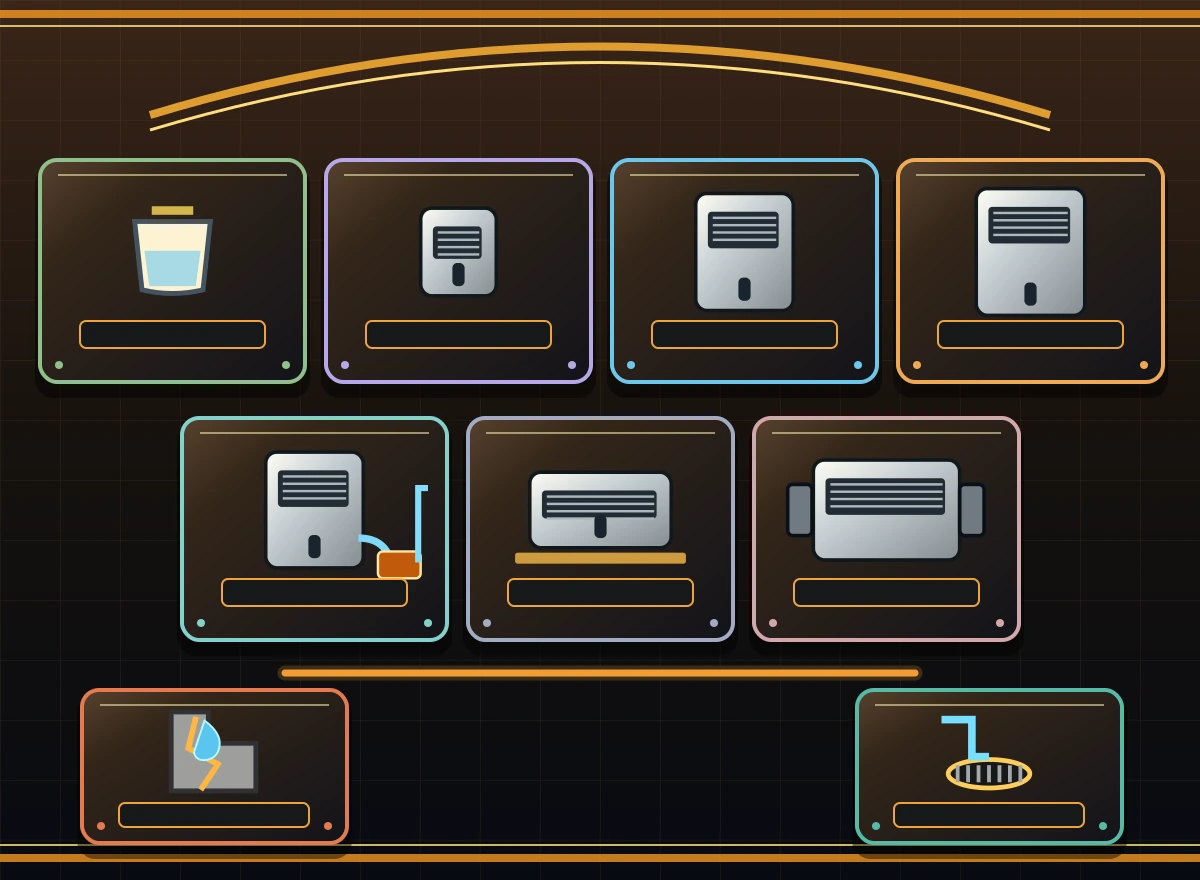
The questions that change the result
Moisture severity: Is the humidity slight, sustained or growing because new water continually enters? Zone and layout: Can air realistically reach the machine? Drainage: Does water stay in a bucket, flow downhill or require a lift? Temperature: Will the chosen technology work in the actual environment? Service: Is the machine accessible enough for its intended duty?
These are distinct questions. A built-in pump answers a drain-routing constraint, not a wet-foundation problem. A bigger pint label cannot repair airflow through walls. A dedicated unit may be justified when the environment warrants it, not merely because its price makes Bruce’s eyes sparkle.
Want the room-specific answer?
Head to Where’s It Damp? for basement, bathroom, bedroom, open-floor and crawl-space decisions. Room pages cover conditions; the equipment pages above own the stable buying state and the current researched product judgments, limitations and merchant exits.
Bruce’s final showroom deal
If cheap is enough, buy cheap. If the job needs dedicated equipment, buy dedicated. If water is entering the house, don’t buy a bigger dehumidifier to camouflage it. The route above leads to the correct class—not a pay-to-play parade of random appliances.